Letter Writing as Personal Expression: Choose What to Share
Letter writing as personal expression helps you shape a message in your own voice, protect private details and decide who should read it.
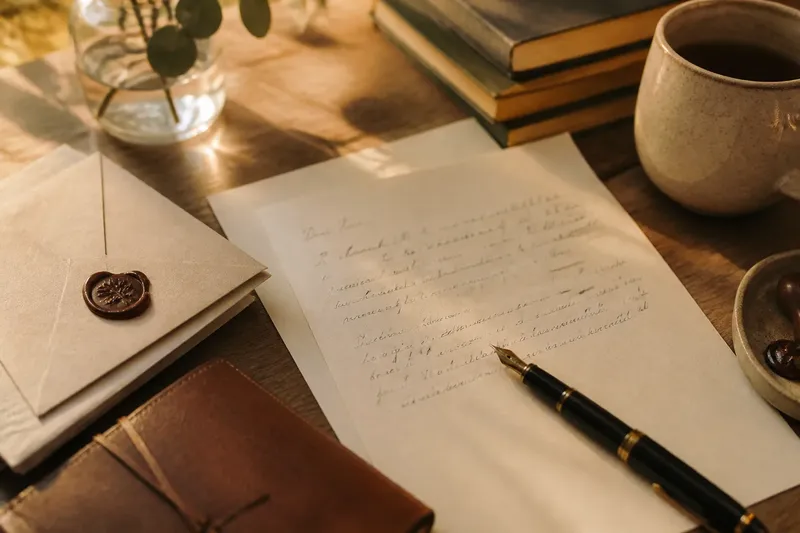
You have rewritten the same sentence three times, and it still does not sound like you. Letter writing as personal expression gives that thought room to take shape before you decide whether anyone else should read it.
A letter can stay private, go to one person, or reach a wider audience. Choosing its destination is part of writing it, not a chore to leave until the page is finished.
How can letter writing help you find your voice?
Start with a blank page or a plain text document rather than a template designed to make you sound impressive. Write the sentence you keep returning to, even if it feels blunt or unfinished. Notice what it carries: a memory, a question, a point of view, or a feeling you have not yet named.
An address can make your language more specific. “Dear Sam” may lead somewhere different from “To whoever finds this”, while “Dear me” can ease the pressure to explain yourself to an audience. You do not need to choose a real recipient yet; the address is a prompt, not a promise.
On a first pass, keep moving. Let an awkward sentence stand rather than polishing it mid-thought. If a phrase sounds borrowed—grand, apologetic, or unusually tidy—mark it and return to it later.
What should you decide before sharing a letter?
Name the audience you are considering. A letter to one trusted friend can hold context and uncertainty that might feel exposed in a public post. A note for a family gathering may need to make sense to people who do not know the whole story.
Choose what you want the letter to do. It might invite a conversation, preserve a memory, offer thanks, or let readers understand your point of view. Use that purpose to edit: remove a detail that adds colour but serves no purpose, and keep a plain sentence if it carries the meaning.
Consider what is not yours alone to disclose. Another person’s health, private message, or identifiable experience may belong in your draft without belonging in a shared version. Replace names with roles, remove a scene, or write about your own response instead. For sensitive legal, health, or safety matters, seek advice from a qualified professional before making a public disclosure.
How can you revise without losing your voice?
Read the draft aloud, even in a whisper. Listen for lines you would never say, long explanations that hide the point, or softened phrases that no longer feel honest. Revision is not a demand to sound fearless; it is a chance to make the letter recognisably yours.
Use this set of checks to decide what to change:
- Find the sentence carrying the main thought. If it is clear, keep it; if not, rewrite it in plain language.
- Circle words that feel borrowed or overly formal. If you would not say them aloud, replace them; otherwise, leave them.
- Check whether the opening gives the intended reader a reason to continue. If not, add the context they need; if it does, keep the opening.
- Look for details that expose someone else without helping your purpose. If you find one, remove or generalise it; if the point depends on it, seek appropriate consent before sharing.
- Read the final lines and decide whether they invite a reply, close the subject, or deliberately leave space. If their effect is unclear, revise them; if it is intentional, keep them.
- Check the format against your audience. If a public post could travel beyond its first readers, remove anything you would not want forwarded; if the letter is for one person, choose a direct form such as a sealed envelope or private message.
Say you have drafted a thank-you letter to a former teacher, and its opening includes a classmate’s private story. You want the teacher to understand why a kindness mattered, not to expose that classmate. In your draft, you replace the anecdote with a sentence about how the kindness affected you, then read the passage aloud. The resulting decision is clear: keep the personal response and leave out the classmate’s experience.
How do you choose an audience and format?
Make a separate sharing copy. Keeping the original preserves your first, unedited version; a duplicate gives you room to tailor the wording. For a handwritten letter, copy the final draft onto fresh paper. In a digital document, duplicate the file before changing it.
Match the format to the intention. A sealed envelope suits a direct exchange. A printed page can work for reading to a small gathering. A public post can be forwarded beyond its first audience, so consider that before publishing. You can also share a passage or decide that keeping the letter private is the expression you wanted.
If the moment feels overwhelming, pause before sending. Put the page away, do something else, and return when you can read it as both writer and recipient. The aim is not to erase emotion; it is to leave enough room to hear your own choice.
Fine stationery, wax seals, and elaborate handwriting are not worth the effort unless they make the act meaningful to you. A clean sheet and a pen that writes smoothly are enough to begin.
What do people ask about letter writing as personal expression?
Does a letter have to be sent?
No. Writing can help you give shape to an experience without turning it into a message for someone else. Keep it, revisit it later, or discard it according to the purpose you chose.
How personal should a shared letter be?
Share enough to make your meaning clear, while protecting details that are not yours to publish. A personal voice can be direct without disclosing every private fact behind it.
Can I write a letter for more than one audience?
Yes, but different readers may need different versions. Keep a full private draft and make a separate copy when context or relationships change what you want to say.
What if the finished letter sounds unlike me?
Read it aloud and restore any plain phrase that editing made stiff or distant. You do not need to remove every hesitation; some pauses and qualifications belong to an honest voice.
A letter creates space between having a thought and sharing it. Begin with one sentence you can stand behind, then decide whether it belongs on a private page, in one person’s hands, or somewhere wider. That choice is part of letter writing as personal expression, too.